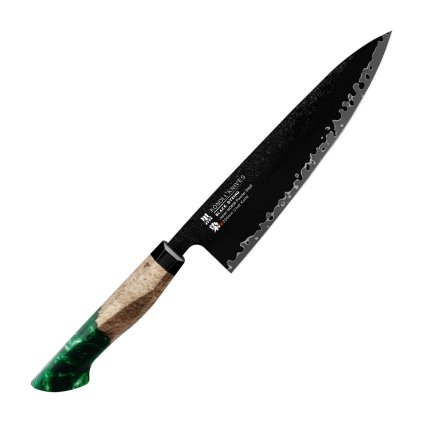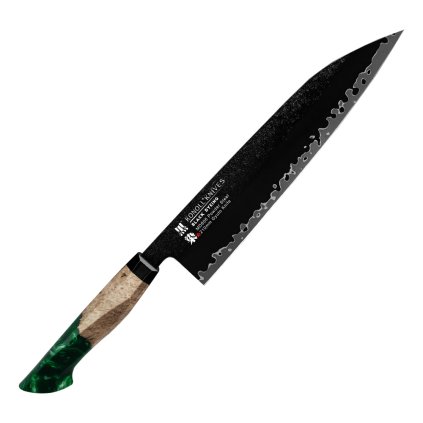
MD 606 Powder Steel
MD606 Powder Steel
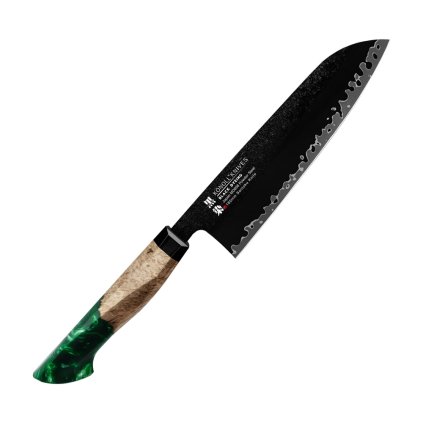
MD606 Powder Steel is a powder metallurgy steel (PM steel) used as a high-performance core material for kitchen knives, especially in 3-layer (sanmai/clad) construction. The steel is produced using powder metallurgy, which involves atomizing molten steel into fine particles and then compressing and sintering them under high pressure and temperature. This results in a uniform, very fine-grained material structure, which is a key advantage of this technology over conventional cast or rolled steels.
Main properties of MD606 Powder Steel
High hardness and edge retention
After heat treatment, the core of MD606 achieves a hardness of 60–63 HRC, which is typical for high-performance knives. This hardness ensures high wear resistance and excellent ability to maintain a sharp cutting edge even with intensive use.
Fine microstructure
Thanks to powder metallurgy, the steel has a very fine and homogeneous microstructure, which leads to better resistance to cracking and unwanted inclusions. This means greater consistency in performance between individual pieces.
Excellent cutting properties and toughness
Powder steel allows for a higher content of alloying elements (such as vanadium) without loss of cohesion, which improves wear resistance, cutting edge retention, and overall toughness. This is especially important for sharp, thin edges, such as those commonly used in chef's knives.
Good corrosion resistance
Although the specific chemical composition of MD606 is not publicly standardized, the steel presented by the manufacturer offers increased resistance to stains and corrosion compared to ordinary carbon steels, which is advantageous for knives used in the kitchen.
Why powder steel works so well for knives
Steel produced by powder metallurgy, such as MD606, offers a number of advantages:
Smaller and more uniform carbides – powder production produces very small carbide particles that increase wear resistance without significantly compromising toughness.
Higher alloying element content – the technology allows for the safer incorporation of elements such as vanadium, molybdenum, or chromium, which positively affect the performance of the steel.
More stable structure – the homogeneous material reacts evenly to heat treatment, which increases the consistency of its properties.