White Steel - Takefu Shiro 2
Takefu Shiro 2 steel (often referred to as White Steel #2 or "Shirogami #2") is a high-carbon steel traditionally produced by the Japanese steelworks Takefu Special Steel.
Chemical composition and origin
Shiro 2 is a classic unalloyed carbon steel made from extremely pure raw materials, often refined from tamahagane (steel originally used for Japanese swords). Compared to other steels, it has minimal impurities, which allows it to achieve exceptional sharpness.
Typical composition
Carbon (C): ~1.0–1.1%
Silicon (Si), manganese (Mn): very low content
No alloying elements (such as chromium, molybdenum, vanadium, etc.)
#showmore#
Properties
Extreme sharpness: Thanks to its high carbon content and purity, Shiro 2 is capable of achieving a very thin, aggressive edge – ideal for precision cutting.
Easy to sharpen: Compared to modern powder steels, it is easy to sharpen and polish, which is particularly appreciated by professionals.
High hardness: Heat treatment can achieve a hardness of around HRC 61–63, which allows for long edge retention.
Disadvantages and maintenance
Low corrosion resistance: This is a non-stainless steel – it oxidizes easily if not dried and treated with oil after use.
Brittleness: The high carbon content means lower toughness – knives made from this steel are not suitable for prying or working with bones.
Uses
Premium kitchen knives (gyuto, yanagiba, petty, etc.)
Traditional Japanese hand tools
Tools for precision work where clean and accurate cutting is essential
Takefu Shiro 2 is highly prized among knife makers and chefs for its exceptional sharpness, easy sharpening, and clean traditional character. However, it requires careful maintenance as it is not stainless. Ideal for those looking for an authentic Japanese tool with soul and tradition.





Product sorting
List of products




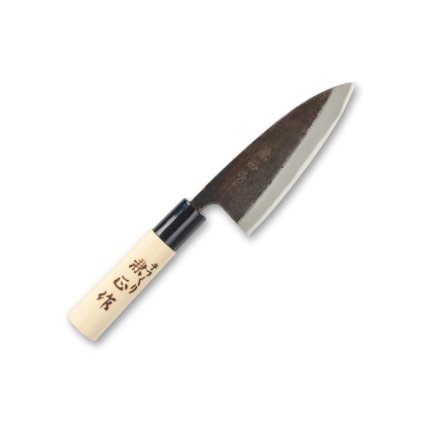
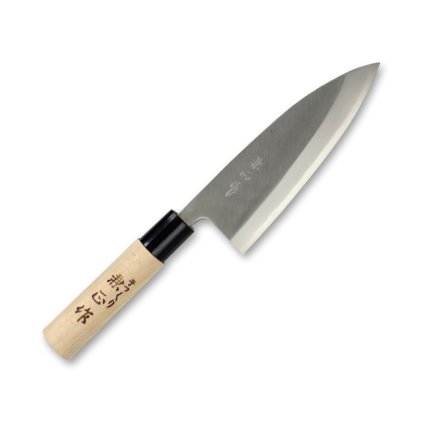
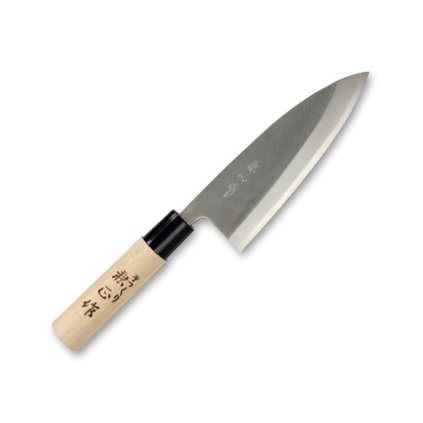
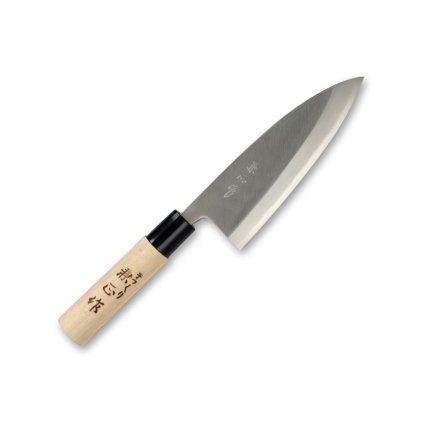


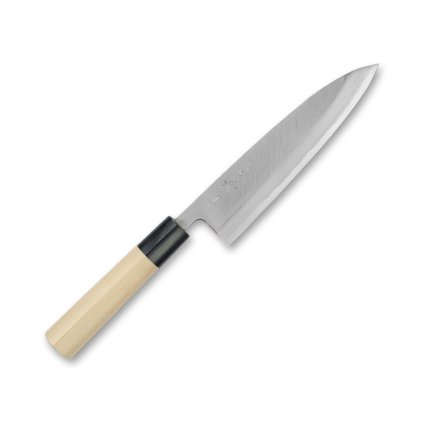
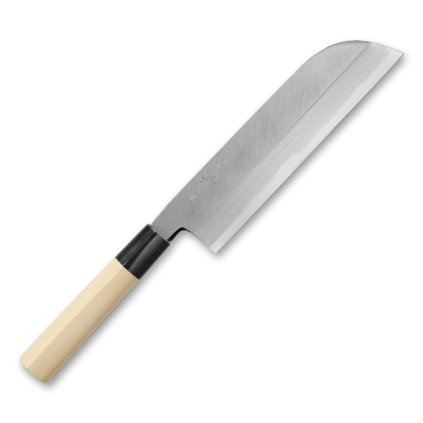

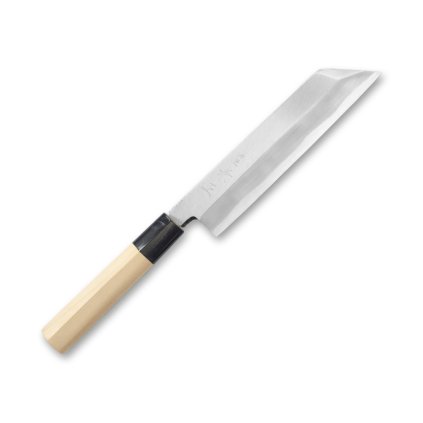

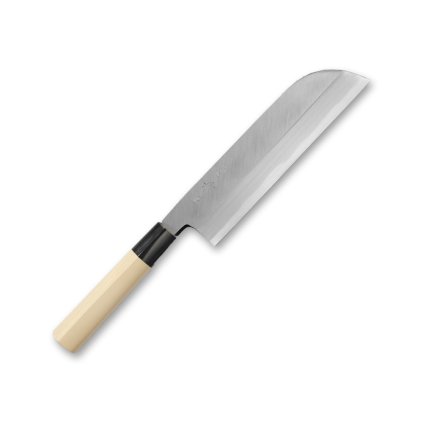
Listing controls
The designation "White Steel" (Shirogami) comes from the Japanese carbon steel classification system introduced by the metallurgical company Hitachi Metals. The names "white" and "blue" (e.g., White Steel #1/#2 and Blue Steel #1/#2) do not refer to the color of the steel itself, but to the color of the paper in which the individual types of steel were packaged when shipped from the steel mill:
Why "white"?
White Steel (Shirogami) was originally packaged in white paper.
This paper symbolized that it was pure carbon steel without alloying additives (such as chromium or tungsten).
Shirogami is therefore "purer" and more traditional – closest to the steels historically used for the production of Japanese swords.
And what about "Blue Steel"?
In contrast, Blue Steel (Aogami) was packaged in blue paper.
It contains alloying elements such as chromium and tungsten, which improve the toughness and durability of the blade, but at the same time slightly reduce the ease of sharpening and the cleanliness of the cut.
The name "White Steel" therefore refers to:
The color of the wrapping paper from the smelter, not the color of the steel itself.
The purity of the chemical composition – it is almost pure carbon steel with excellent sharpness and easy sharpening.