
Santoku Knife 170 mm Kanetsugu Miyabi Isshin
Code: 2003Related products


Product detailed description
Japanese Santoku Knife 170 mm Kanetsugu Miyabi Isshin
The Kanetsugu Miyabi Isshin Santoku 170 mm is a versatile Japanese kitchen knife designed for everyday tasks in the modern kitchen. The Santoku type is among the most popular Japanese knives thanks to its versatility, lightweight construction, and exceptionally comfortable handling. The name Santoku translates to "three virtues," symbolizing its ideal performance when slicing meat, fish, and vegetables. With a blade length of 170 mm, this Santoku represents the perfect compromise between compactness and multi-purpose utility. Compared to a classic European chef's knife, it feels lighter, more agile, and allows for more precise control during cutting.
Knives from the Miyabi Isshin series are manufactured using the traditional Japanese SAN-MAI method, featuring a three-layer blade construction. The hard core made of high-quality AUS-8 stainless steel is protected by two layers of softer SUS410 steel. This combination ensures high sharpness, excellent edge retention, easy sharpening, and great resistance to damage at the same time. The blade hardness reaches approximately 57–58 HRC, providing the ideal compromise between edge durability, easy maintenance, and comfortable everyday use. AUS-8 steel is a popular Japanese stainless steel favored for its good corrosion resistance, reliability, and excellent cutting performance.
The ergonomic handle, crafted from natural rosewood, is impregnated against moisture and temperature changes. Thanks to its lightweight design and very well-balanced distribution, the knife feels outstandingly comfortable in the hand, even during extended periods of use.
The Miyabi Isshin series is suitable for both professional chefs and home enthusiasts who want to discover the world of high-quality Japanese kitchen knives. The manufacturer, Seki Kanetsugu, is one of the oldest cutlery companies in Seki City, Japan – a region renowned for centuries for manufacturing samurai swords and kitchen knives.
#ShowMore#
Similar Knives and Recommended Alternatives
If you are looking for a similar Japanese Santoku knife, we recommend exploring other Santoku-type chef's knives, which are ideal for daily slicing of meat, fish, vegetables, and herbs due to their lightweight build, precise cutting, and excellent maneuverability.
Dimensions and Parameters of the Kanetsugu Miyabi Isshin Santoku 170 mm Knife
| Japanese Santoku Knife 170 mm Kanetsugu Miyabi Isshin | |
| Brand: | Kanetsugu |
| Series: | Miyabi Isshin |
| Knife Type: | Japanese Santoku knife |
| Blade Length: | 170 mm |
| Total Length: | 295 mm |
| Blade Height: | 46 mm |
| Blade Thickness: | 1.6 mm |
| Weight: | 95 g |
| Blade Construction: | Three-layer SAN-MAI construction |
| Blade Material: | AUS-8 steel core, SUS410 outer layers |
| Blade Hardness: | 57–58 HRC |
| Bevel/Grind: | Double bevel (symmetrical grind) |
| Handle: | Rosewood |
| Recommended Use: | Everyday cutting of meat, fish, vegetables, and herbs due to its lightweight build, precise cut, and excellent control. |
| Country of Origin: | Seki, Japan |
|
Need Advice? We are happy to help you with your choice or answer any product-related questions. Call our customer hotline at +420 702 049 048, available for you Mon - Fri, 7:30 AM - 4:00 PM. |
Why Choose the Kanetsugu Miyabi Isshin Santoku 170 mm Knife
Ideal for portioning fish, slicing meat, preparing sushi and sashimi, and filleting
The three-layer design ensures high durability and a long lifespan.
High-quality stainless steel offering excellent sharpness and easy sharpening.
A hardness of 57–58 HRC ensures reliable cutting properties.
Weighs only 95 g for comfortable, precise work without hand fatigue.
Ergonomic grip and natural look with high resistance to moisture.
Easy maintenance and multi-purpose use in both home and professional kitchens.
Traditional knife-making craftsmanship with a history dating back hundreds of years.
Santoku – Features and Uses
| Topic | Description |
| Cutting Performance and Feel | When slicing, the Santoku knife feels remarkably light, precise, and exceptionally easy to control. Thanks to its thin blade geometry and fine Japanese grind, it glides smoothly through ingredients with minimal resistance, allowing for clean, precise cuts without tearing the food's structure. Compared to conventional European kitchen knives, the Santoku offers faster, smoother, and more comfortable performance for everyday cooking. |
| Who is the Santoku Knife Best For? | • For everyday home cooking • For professional chefs as well as home cooking enthusiasts • For users seeking a versatile Japanese knife • For precise slicing of vegetables, meat, and fish • For cooks who prefer lightweight and nimble knives • For beginners exploring the world of Japanese knives • For prolonged use without unnecessary hand fatigue |
| Santoku vs. Gyuto | The Santoku is a more compact, lightweight, and agile Japanese knife ideal for daily home use and rapid slicing of vegetables, meat, and fish. The Gyuto features a longer blade and a more versatile character similar to a European chef's knife, making it suitable for larger ingredients and professional tasks. The Santoku offers highly comfortable handling and precise cut guidance in tighter spaces. The Gyuto, on the other hand, allows for longer and smoother drawing cuts when portioning meat or prepping larger food items. Compared to the Gyuto, the Santoku feels lighter and more compact, while the Gyuto delivers greater versatility across a wider spectrum of culinary techniques. |
Frequently Asked Questions
Recommendations and Maintenance for Japanese Knives
Never wash the knife in a dishwasher. Hand wash it after use and dry it immediately.
Do not use the knife as a lever and do not bend the blade. The knife is intended exclusively for cutting and slicing.
Protect the blade and edge from drops, impacts, and contact with hard materials.
If you will not be using the knife for an extended period, lightly coat it with oil and wrap it in a cloth or newspaper.
Store the knife in a safe place, ideally in a protective sheath, a knife block, or on a magnetic knife strip.
Keep the kitchen knife out of reach of children and exercise increased caution when handling it.
Please Note
Each knife is crafted from natural materials. Every piece of steel and wood is unique, which means the final appearance of your knife may vary slightly from the product photo. Rest assured, the knife you receive will share the exact same premium quality and meticulous craftsmanship.
Sharpening Your Kitchen Knife
To maintain maximum sharpness, we recommend regularly maintaining your Japanese kitchen knife using high-quality water whetstones, diamond sharpening stones, honing steels, and leather strops. Proper edge care significantly extends the lifespan of the knife, enhances cutting comfort, and helps preserve the precise cutting properties of the blade.
Water whetstones are among the gentlest and most effective methods for sharpening Japanese knives. They allow for precise edge restoration and are suitable for both regular maintenance and complete resharpening. Diamond sharpening stones stand out due to their high efficiency and rapid material removal, making them ideal even for harder types of Japanese steel.
Honing steels serve primarily to realign and straighten the edge during regular knife use. They help keep the edge sharp longer between individual sharpening sessions. For fine polishing and achieving an extreme, razor-sharp edge, we also recommend using leather strops, which remove microscopic burrs and leave the blade perfectly smooth.
If you feel unsure about sharpening, feel free to reach out to us. We will professionally sharpen your knives according to your individual requirements. We also regularly organize knife sharpening courses, where we will teach you proper sharpening techniques and how to use whetstones, honing steels, and strops. Improper sharpening can cause irreversible damage to the edge or alter the blade's geometry.
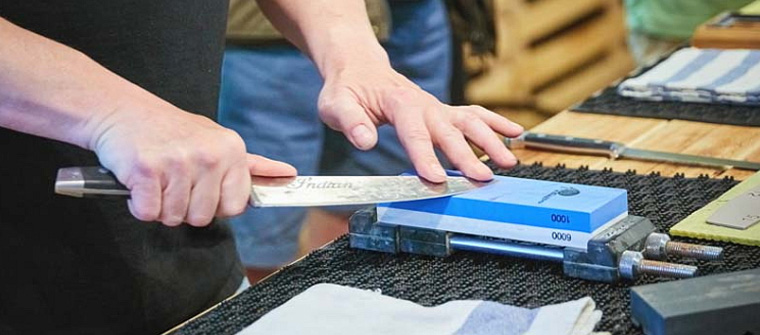
Recommended Products for Knife Sharpening and Maintenance
| Category | Purpose / Function | Link |
| Water Whetstones | Gentle sharpening and regular edge maintenance for Japanese knives. | View Whetstones |
| Diamond Sharpening Stones | Fast sharpening, higher material removal, and maintenance of harder steels. | View Stones |
| Honing Steels | Continuous realignment of the edge between sharpening sessions. | View Honing Steels |
| Leather Strops | Fine polishing of the edge and removal of microscopic burrs. | View Strops |
| Knife Sharpening Courses | Hands-on training in proper sharpening and maintenance of kitchen knives. | View Courses |
Related Topics on Knife Sharpening and Care
| Topic | What You Will Learn | Link |
| Whetstone Care | How to properly clean, dry, and store your whetstone to maximize its lifespan. | How to Care for a Whetstone? |
| Flattening a Whetstone | Why a flat whetstone is crucial for precise and safe knife sharpening. | How to Flatten a Whetstone? |
| The Correct Sharpening Angle | How to maintain a consistent angle while sharpening and why it affects sharpness and edge life. | How to Hold the Correct Sharpening Angle? |
| Whetstone Grit Guide | How to choose the right grit size for repairs, routine sharpening, and final edge polishing. | How to Choose Whetstone Grit? |
| Water Whetstone vs. Diamond Sharpening Stone | A comparison between water whetstones and diamond stones, including recommendations on which type to choose. | Water vs. Diamond Sharpening Stone |
Cleaning Your Kitchen Knife
After each use, wash the knife by hand with lukewarm water, dry it thoroughly with a soft towel, and store it in a safe place. Residue from aggressive foods can cause stains resembling rust on the blade's surface. This is not always corrosion of the blade itself, but often microscopic food particles or environmental elements adhering to it. To remove them, you can create a fine paste by mixing baking soda with a little water, and gently rub the surface using an old wine cork.
Dellinger Guarantee
Products supplied by Dellinger come with a 100% satisfaction guarantee. We carefully inspect every item and warrant its premium quality, reliability, and long lifespan. We provide a lifetime warranty against hidden defects. Should you have any questions, our team is entirely at your disposal and will gladly assist you with your selection, usage, and product care.
Additional parameters
| Category: | Miyabi Isshin – Traditional Japanese Kitchen Knives |
|---|---|
| Warranty: | 2 years |
| Weight: | 0.095 kg |
| EAN: | 4511125020034 |
| čepel: | ocel 3 vrstvá |
| ? délka ostří: | 151-200 mm |
| typ rukojeti (střenky): | ergonomická - západní typ |
| typ nože: | Santoku |
| série: | Kanetsugu Miyabi Issin |
| production: | Japan |
| The item has been sold out… | |
Kanetsugu Seki Japan – The tradition of Japanese swords in modern cuisine
Kanetsugu Seki Japan is a traditional Japanese knife brand originating in the city of Seki, which is considered the centre of Japanese sword making. Its history dates back to the 14th century, when famous samurai swords were manufactured here. It is this sword-making tradition that the Kanetsugu brand has brought to the world of kitchen knives. The company was officially founded in 1918 by master craftsman Matsujiro Kanetsugu, who continued the legacy of the legendary 14th-century swordsmith Kanetsugu Naoe. Now in its fourth generation, the modern company combines traditional craftsmanship with modern production technologies, while still priding itself on hand sharpening, polishing and precision workmanship.
#showmore#
What makes Kanetsugu knives so special?
A combination of tradition and technology: Hand-finished blades, many with a Damascus pattern or made from modern powder steels (e.g. SG2), combine aesthetics and performance.
Sharpness and durability: Kanetsugu knives are known for their extreme sharpness, high hardness and long cutting life.
Precision manufacturing: Kanetsugu emphasises ergonomics, balance and perfect control when cutting.
Japanese design: Elegant, traditional and modern blade and handle shapes with an emphasis on aesthetics and user comfort.
Model series and uses
Popular series include:
Zuiun – top-of-the-range models made from SG2 powder steel with a Damascus pattern and a beautiful mirror finish.
Saiun – an elegant series with classic Damascus steel.
Pro M, Pro J, Pro S – professional series for chefs and demanding households.
Kanetsugu knives are manufactured for various uses – from versatile Gyuto knives to small Petty knives and traditional Kiritsuke or Nakiri knives.
Conclusion
Kanetsugu Seki Japan is the choice for those who seek Japanese quality, craftsmanship and uncompromising sharpness. Their knives embody the spirit of the samurai tradition and are ideal for both professionals and lovers of exceptional kitchen utensils.
| Manufacturing company : | Seki Kanetsugu Cutlery Co. |
|---|---|
| Address : | 7 Nishi-Monzen-Cho, Seki City, Gifu Prefecture 501-3837 |
| E-mail : | yukie@sekikanetsugu.co.jp |
| EU representative of the manufacturer : | Dellinger s.r.o. |
| Email of the EU representative : | info@dellinger.cz |