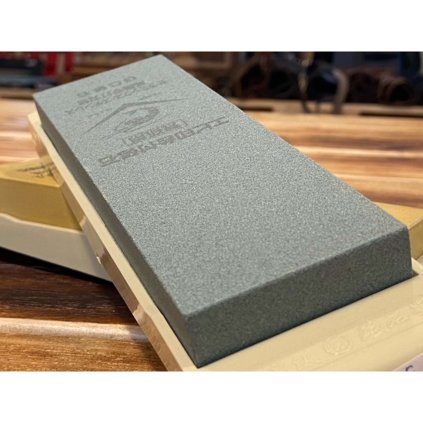
synthetic grinding stones
They are generally made of alumina. This is the same abrasive material used in oil grinding stones. The difference between the two, however, is the binder that holds the abrasive together in the stone. Water abrasive stones are softer than oil abrasive stones, allowing for faster grinding. The old abrasive material is broken off and replaced with fresh sharp material. Faster grinding is clearly an advantage of water grinding stones. Another obvious advantage is the use of water rather than oil to remove metal chips from the stone. However, the water stone is not perfect. The softness that promotes faster grinding results in faster wear of the water grinding stone. Wear is also uneven and requires frequent straightening of the grinding surface. For this purpose, you can find the comparison blocks in the section grinding accessories .













Product sorting
List of products

RISAM guide for sharpening knives on water stones, ceramic contact surfaces. The guide is suitable for knives with a blade height of at least 19 mm.

Combination grinding stone Risam with very fast grinding and polishing effect. The stone is made of synthetic Corundum (aluminium oxide). The grinding stone is supplied with a...

Comparison block of grinding stones, ceramic with coarseness JIS #180. Keep your grinding stones straight at all times. Use our leveling block to remove the wavy surface of the...

Japanese Combination Sharpening Stone King KDS #1000/#6000 from the King Deluxe series. Ideal for general sharpening and final edge polishing to a mirror finish. Fast stock...

High quality Risam combination water grinding stone with very fast grinding and polishing effect. The stone is made of synthetic Corundum (aluminium oxide). The grinding stone...


Combination grinding stone Risam with very fast grinding and polishing effect. The stone is made of synthetic Corundum (aluminium oxide). The grinding stone is supplied with a...


Sharpening stone from the SHAPTON Kuromaku series of colour-coded Japanese stones. Each colour represents a different grit according to the Japanese JIS standard. The practical...

High quality Risam combination water grinding stone with very fast grinding and polishing effect. The stone is made of synthetic Corundum (aluminium oxide). The grinding stone...

Adjustable RISAM grinding stone holder, suitable for multiple stone sizes thanks to movable foot with stop. Use the guide screws to adjust the desired stone size. Non-slip...

The water whetstone from Taidea is made from high quality corundum (aluminium oxide), ensuring a very fast sharpening and polishing effect. The stone comes with a rubber...


RISAM ADVANCED sharpening stone set. Includes RISAM stones #800, #1500, #3000 made according to Japanese standards for basic edge repair, fine sharpening, and final polishing +...

Japanese Double-Sided Sharpening Stone KING Toishi with grit #250 and #800 with an ergonomic handle – ideal for fast and safe sharpening of kitchen knives. Fast stock removal,...

Japanese fine-grained sharpening stone King S-45B #4000 from the HOME STONE “HT” series with a stable base – ideal for final honing of the blade and achieving a high level of...
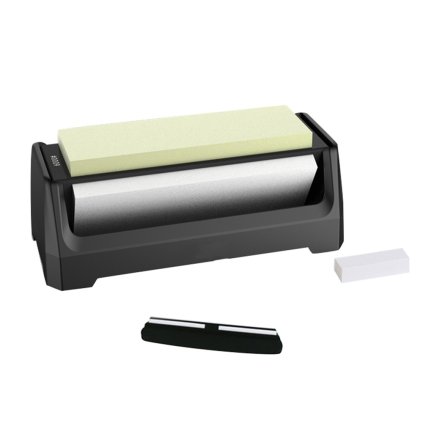
Sharpening Stone Set RISAM including guide to maintain the blade angle. Suitable for precise and fine sharpening. The set includes JIS #800, #2000 and #5000 grit stones + guide.


Kanetsune professional sharpening stone from Gokujo-Toishi series. High quality sharpening stone not only for professionals, on which you will achieve excellent sharpness and a...

Japanese Kanetsune professional sharpening stone from Gokujo-Toishi series. High quality sharpening stone not only for professionals, on which you will achieve excellent...
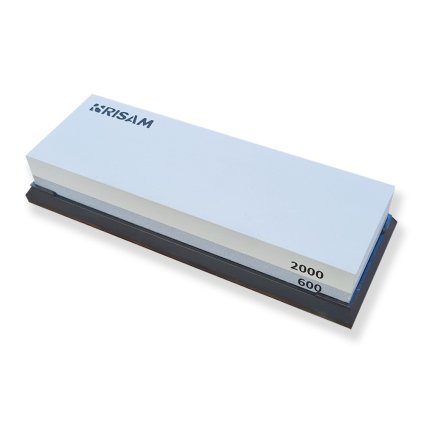
Combination grinding stone RISAM with very fast grinding and polishing effect. The stone is made of synthetic Corundum (aluminium oxide). The grinding stone is supplied with a...