
Knife sharpening guide
How long should you soak a sharpening stone before sharpening?
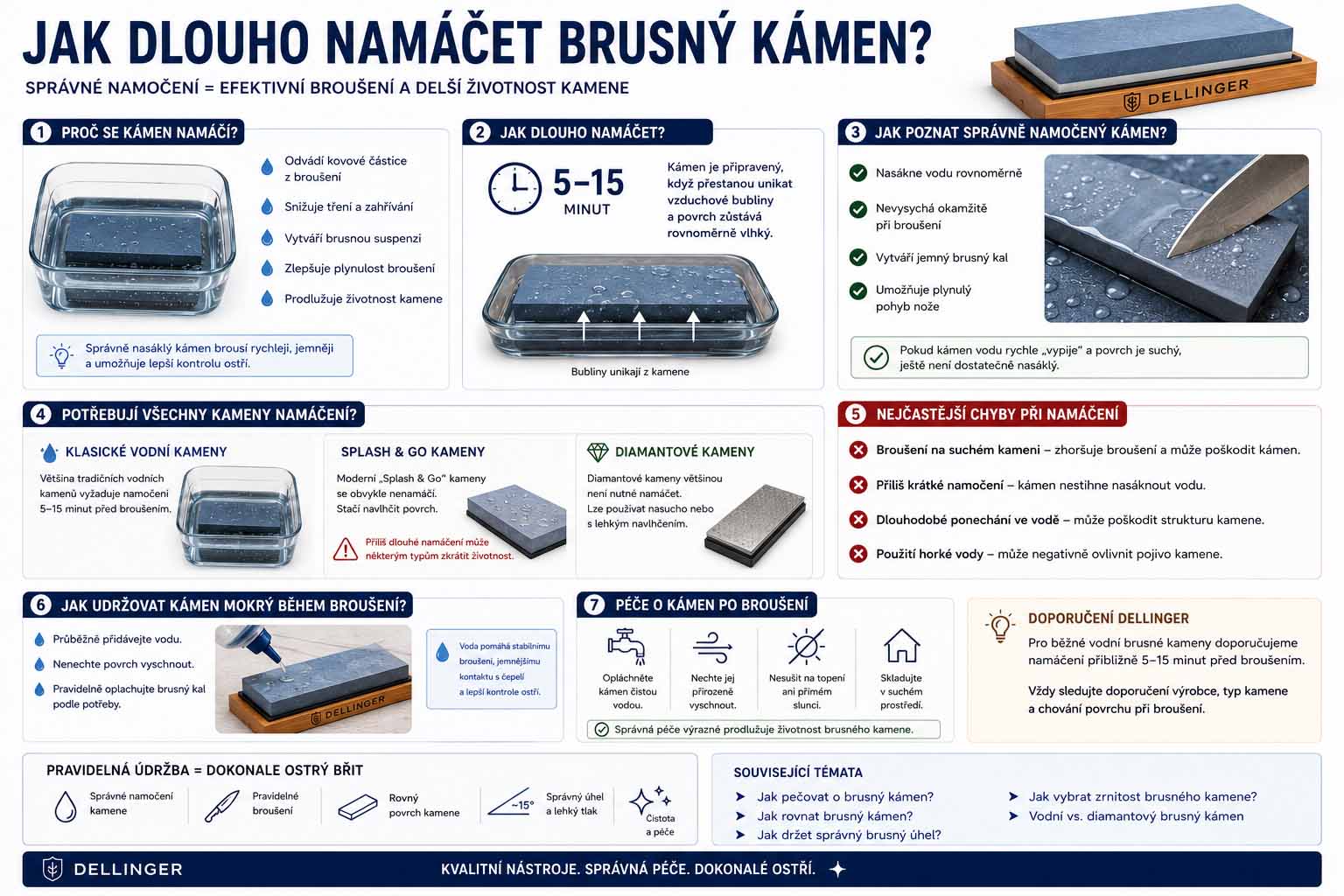
Correctly soaking a sharpening stone affects how smoothly it cuts, how well it carries away metal particles and how precisely you can control the edge. Most classic water stones need about 5–15 minutes in water before sharpening. Modern Splash & Go stones usually only need surface wetting.
In this article you will learn
- how long to soak a sharpening stone
- why water is important when sharpening
- how to recognise a properly prepared stone
- which stones should not be soaked
- the most common soaking mistakes
- how to care for the stone after sharpening
Why soak a water sharpening stone?
Water sharpening stones work with water. It helps carry away metal particles, reduces friction, prevents overheating, creates sharpening slurry and improves smoothness. A properly soaked stone cuts more effectively, responds better to blade movement and allows more accurate edge control.
Dellinger recommendation
For standard water sharpening stones, we recommend soaking for about 5–15 minutes. The stone is ready when air bubbles stop escaping and the surface stays evenly wet.
How long should you soak a sharpening stone?
| Stone type | Preparation before sharpening | Note |
|---|---|---|
| Classic water sharpening stone | Usually 5–15 minutes in water | Wait until air bubbles stop escaping. |
| Splash & Go stone | Only wet the surface | Long soaking may damage some stones. |
| Diamond sharpening stone | Usually not soaked | Used dry or only with light surface wetting. |
How to recognise a properly soaked stone?
A properly prepared sharpening stone can be recognised by a few simple signs:
Air in the stone pores has been replaced by water.
The stone does not immediately drink the water and does not dry during sharpening.
The slurry helps smoother contact between blade and stone.
The blade does not skip and the angle is easier to control.
Do all stones need soaking?
No. This is one of the most common mistakes. Classic water sharpening stones are usually soaked, but modern Splash & Go stones are normally only wetted. Diamond stones usually are not soaked at all.
Be careful with long soaking
Long soaking can damage the binder of some fine Japanese stones, weaken the structure, cause cracking or shorten service life. Always follow the manufacturer’s recommendation.
What happens when the stone is soaked incorrectly?
| Problem | What it causes |
|---|---|
| Stone too dry | Lower efficiency, fast drying, higher friction and poor removal of metal particles. |
| Too short soaking | The stone does not absorb enough water and does not work smoothly. |
| Long-term storage in water | May weaken the structure, damage the binder, deform or crack the stone. |
| Hot water | May negatively affect the stone binder. |
How to keep the stone wet while sharpening?
During sharpening, keep adding water, do not let the surface dry and rinse slurry as needed. Water supports stable sharpening, smoother blade contact and better edge control.
How to care for a sharpening stone after use?
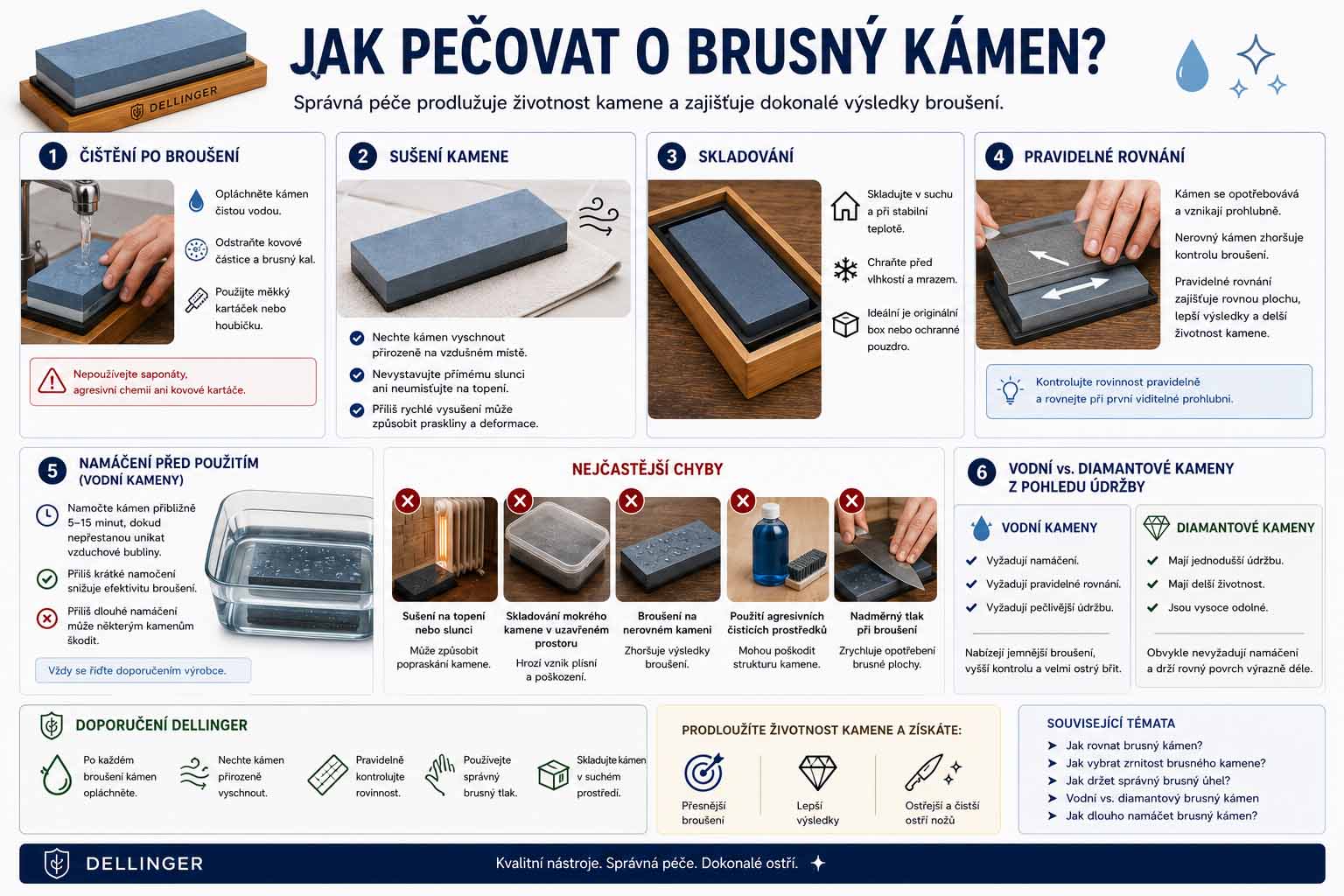
Remove sharpening slurry and metal particles with clean water.
Do not dry the stone on a heater or in direct sun.
Long-term moisture can shorten the life of some stones.
A hollow stone makes angle control harder.
Summary
Soak classic water sharpening stones for about 5–15 minutes. The stone is ready when bubbles stop escaping and the surface remains evenly wet. Modern Splash & Go stones are usually only wetted and diamond stones are usually not soaked. After sharpening, rinse the stone, let it dry naturally and store it dry.
Related topics
FAQ
How do I know the stone is soaked enough?
The stone stops releasing air bubbles and the surface remains evenly wet.
Can a sharpening stone be soaked for too long?
Yes. Some fine Japanese stones can be damaged by long soaking.
Does a diamond stone need soaking?
No. Diamond sharpening stones are usually used dry or only with water on the surface.
How long does a sharpening stone last?
With correct maintenance, a sharpening stone can last for many years.
About the author
The article was prepared by Marek Šmíd, a specialist in Japanese kitchen knives, sharpening, edge maintenance and practical knife use. The content is based on long-term experience with sharpening, testing stones and working with quality European and Japanese blades.