
Japanese knife maintenance
How often should you sharpen Japanese knives to keep maximum sharpness?
Japanese knives are known for exceptional sharpness, hard steel and precise cutting. To keep these qualities for as long as possible, regular, gentle and careful maintenance is important. Waiting until the knife is very dull usually means more aggressive sharpening and higher material removal.
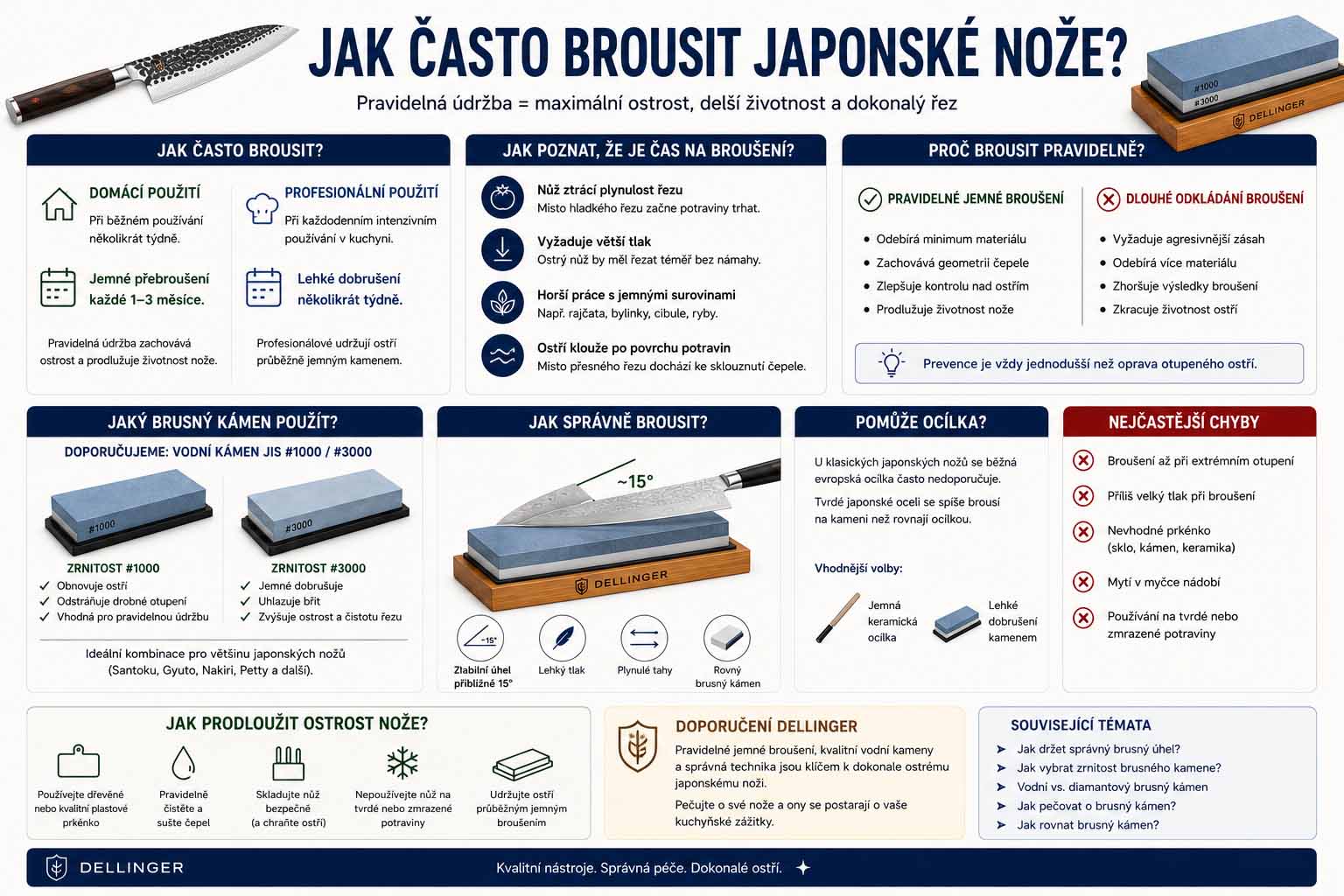
In this article you will learn
- how often to sharpen Japanese knives
- how to recognise that it is time to sharpen
- how to care for the edge correctly
- which sharpening stone to choose
- when a ceramic honing rod can help
- why prevention is better than aggressive sharpening
Why are Japanese knives different?
Japanese knives are often made from harder steels than standard European knives. Thanks to this, they hold sharpness longer, allow a finer sharpening angle and provide a very precise, clean cut. They also require proper handling, more sensitive maintenance and a suitable sharpening stone.
Japanese blades often hold sharpness longer, but can be more sensitive to unsuitable handling.
The correct angle helps preserve the precise cut and edge geometry.
A sharp Japanese knife cuts cleanly without tearing ingredients or requiring excessive pressure.
An unsuitable board, dishwasher or too much pressure can quickly damage the edge.
How often should Japanese knives be sharpened?
Sharpening frequency depends on use intensity, steel type, cutting technique, cutting board and overall care. Regular gentle sharpening is better than waiting for obvious dullness.
| Knife use | Recommended maintenance | Note |
|---|---|---|
| Regular home use | Gentle sharpening about every 1-3 months | For knives used several times per week in normal cooking. |
| Intensive home cooking | Light touch-ups more often according to cutting feel | Watch whether the knife still cuts smoothly without pressure. |
| Professional kitchen | Light sharpening even several times per week | In daily service, the edge is maintained continuously. |
Dellinger recommendation
For a long-lasting sharp Japanese knife, more frequent gentle maintenance is better than late aggressive sharpening. Regular light touch-ups remove less material and help preserve the original blade geometry.
How do you know it is time to sharpen?
Instead of a clean cut, it starts tearing or crushing ingredients.
A sharp Japanese knife should cut almost effortlessly.
Typical examples are tomatoes, herbs, onion, fish or soft fruit.
Instead of biting in, the blade slides over the skin or surface of the ingredient.
Why is regular gentle sharpening better?
Mild and regular sharpening removes minimal material, preserves blade geometry, improves edge control and extends knife life. Delaying sharpening too long leads to more aggressive work and more difficult repairs.
Which sharpening stone should you use?
For regular maintenance, a JIS #1000/#3000 water sharpening stone is practical. #1000 restores the edge and #3000 gently hones and increases sharpness.
| Grit | Use | Suitable for |
|---|---|---|
| #1000 | Edge restoration, removing slight dullness, creating the working bevel | Santoku, Gyuto, Nakiri, Petty and most kitchen knives |
| #3000 | Fine honing, edge smoothing, increasing sharpness | Japanese knives and knives where you want a cleaner cut |
How to sharpen a Japanese knife correctly?
Keep a stable sharpening angle, use light pressure, work with smooth strokes and sharpen on a flat stone. The approximate angle for many Japanese knives is around 15°. Always respect the original geometry of the blade.
Be careful with pressure
Do not force a hard and thin Japanese edge into the stone. Too much pressure can damage the fine edge or unnecessarily change the geometry.
Can a honing rod help?
A standard European steel is often not ideal for classic Japanese knives. A fine ceramic honing rod or a light touch-up on a sharpening stone may be more suitable.
Most common mistakes in Japanese knife maintenance
| Mistake | Why it is a problem |
|---|---|
| Sharpening only after extreme dullness | Requires more aggressive work and higher material removal. |
| Too much pressure | Can damage the fine edge and reduce bevel control. |
| Unsuitable cutting board | Glass, stone and ceramic quickly dull the edge. |
| Dishwasher cleaning | Can damage the edge, handle and blade surface. |
How to prolong Japanese knife sharpness?
Wood or a high-quality plastic board is ideal.
Wash the knife by hand and dry it immediately after use.
Use a stand, magnetic strip or protective sheath.
Avoid bones, frozen food, glass, stone and ceramic.
Summary
For regular home use, gently sharpen a Japanese knife approximately every 1-3 months. In a professional kitchen, light touch-ups may be needed several times per week. The best prevention is regular gentle maintenance, a quality water sharpening stone, a stable angle around 15° and careful treatment of the edge.
Related topics
FAQ
How often should Japanese knives be sharpened at home?
For normal home use, we recommend gentle sharpening approximately every 1-3 months.
How do I know a Japanese knife needs sharpening?
The knife starts requiring more pressure, tears ingredients, slips on food surfaces or cuts tomatoes, herbs, onion and fish worse.
Which sharpening stone is suitable for Japanese knives?
For regular maintenance, a JIS #1000/#3000 combination is practical. #1000 restores the edge and #3000 gently hones it.
Is a standard honing steel suitable for Japanese knives?
A common European steel is often not ideal. A fine ceramic honing rod or light sharpening on a stone may be more suitable.
How can I prolong the sharpness of a Japanese knife?
Use a wooden or quality plastic board, wash the knife by hand, dry it immediately, store it safely and maintain the edge regularly and gently.
About the author
The article was prepared by Marek Šmíd, a specialist in Japanese kitchen knives, sharpening, edge maintenance and practical knife use.