
Kitchen Knives – High-Quality Knives for Precise and Comfortable Cooking
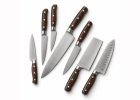
Choose a kitchen knife according to what you cook most often. You will find universal Gyuto and Santoku knives, knives for vegetables, bread, meat, fish, sushi, butcher work, knife sets and accessories for sharpening and safe storage.
Not sure which kitchen knife to choose?
Start with how you cook and what you expect from the knife. For a first quality kitchen knife, a universal Santoku, Gyuto / Chef or a practical knife set is most often suitable.
#ShowMore#
A kitchen knife is one of the most important tools in the kitchen. A properly chosen knife speeds up ingredient preparation, improves cutting control, reduces hand fatigue and helps achieve a clean result without unnecessary tearing, crushing or slipping.
In the kitchen knives category you will find knives for home cooking, professional gastronomy and demanding lovers of Japanese knife-making tradition. You can choose by knife type, use, manufacturer, blade material, hardness, blade length and whether you want one universal knife, a specialized tool or a complete set.
If you are starting out, the most common choice is a universal Gyuto / Chef or Santoku. If you already know what you cook most often, choose more specifically: Nakiri for vegetables, Yanagiba or Sashimi for fish and sushi, a bread knife for bread, a filleting knife for fish, a boning knife for meat or a butcher knife for tougher work.
Universal knives
Gyuto, Chef and Santoku handle most everyday cutting of meat, vegetables, herbs and common ingredients.
Specialized shapes
Nakiri, Yanagiba, Deba, Sujihiki, filleting, boning or bread knives help with specific tasks.
Blade materials
Choose from stainless, Damascus, carbon, powder, high-performance stainless and traditional Japanese steels.
Care and storage
Sharpening stones, honing rods, cutting boards, magnetic stands, blocks, sheaths and edge protection belong with knives.
How to choose a kitchen knife by use?
The best kitchen knife is not one universal model for everyone. It depends on what you cut most often, how large the ingredients are, what cutting technique you use and whether you want one knife for most work or a precise tool for a specific task.
| What you prepare | Suitable knife type | Why it makes sense |
|---|---|---|
| Everyday cooking | Gyuto, Chef or Santoku | Universal shape for meat, vegetables, herbs, fruit and everyday preparation. |
| Vegetables and herbs | Nakiri, Santoku, Usuba or smaller Utility | A wider or straighter blade helps cut vegetables quickly and precisely. |
| Fish, sushi and sashimi | Yanagiba, Sashimi, Sujihiki or filleting knife | A longer, narrower blade enables a clean pull cut without crushing the fish texture. |
| Meat and poultry | Butcher, boning, slicing or breaking knife | A specialized shape helps separate meat, tendons and membranes with better control. |
| Bread and pastry | Bread and pastry knife | A serrated edge goes through crust without unnecessarily crushing the crumb. |
| Detail work | Petty, Utility, peeling or paring knife | A smaller blade is agile for peeling, trimming, decoration and in-hand work. |
Basic types of kitchen knives
The category of kitchen knives is broad. It is important to understand the difference between individual shapes. Some knives are universal, others are designed for one precise task. The better the shape matches the ingredient and cutting technique, the more comfortable and safer the work will be.
| Knife type | Characteristics | Ideal use |
|---|---|---|
| Gyuto / Chef | Universal chef’s knife with a longer blade and wide use. | Meat, vegetables, herbs, fruit and everyday cooking. |
| Santoku / Bunka | Japanese universal knife with a wider blade, good control and comfortable cut guidance. | Vegetables, boneless meat, fish, precise cutting and quick preparation. |
| Nakiri | Knife with a straighter blade designed mainly for vegetables and herbs. | Vegetables, herbs, salads, cabbage, onion and root vegetables. |
| Yanagiba / Sashimi | Long narrow blade for clean pull cuts. | Sashimi, sushi, fish slicing and fine ingredient presentation. |
| Sujihiki / slicing knife | Long slim blade for smooth cuts with minimal resistance. | Slicing meat, fish, roasts, ham and larger ingredients. |
| Deba | More robust Japanese knife for fish work. | Portioning fish, separating heads, bones and firmer work according to model type. |
| Petty / Utility | Smaller practical knife for precise tasks. | Fruit, vegetables, peeling, trimming, small ingredients and in-hand work. |
Santoku or Gyuto? The most common choice dilemma
If you are choosing your first quality kitchen knife, you will probably decide between Santoku and Gyuto. Both are universal, but each behaves a little differently. Santoku usually has a wider and slightly shorter blade and is excellent for vegetables and board work. Gyuto is usually longer, more elegant and more universal for larger pieces of meat, vegetables and rocking cuts.
| Choice | Choose if... | Typical use |
|---|---|---|
| Santoku | you want a comfortable universal knife mainly for vegetables, boneless meat and small to medium ingredients. | Vegetables, herbs, meat, fish and quick home preparation. |
| Gyuto | you want a longer universal knife for larger ingredients, meat, vegetables and broader chef use. | Meat, larger vegetables, universal work, longer pull cuts and rocking cuts. |
Dellinger tip
If you are not sure, start with a quality universal Santoku or Gyuto. Later expand your equipment according to what you cook most often: Nakiri for vegetables, a bread knife for bread, Petty for detail work or Yanagiba/Sashimi for fish.
How to choose a kitchen knife by blade material?
Blade material affects sharpness, edge retention, maintenance, corrosion resistance and cutting feel. No single steel type is best for everyone.
| Material / steel type | Main advantage | Who it is suitable for |
|---|---|---|
| Stainless steels | Easier maintenance and good resistance to normal kitchen moisture. | Households wanting a practical everyday knife. |
| High-performance stainless steels | Better edge retention and higher performance while keeping reasonable maintenance. | More demanding home cooks and frequent cooking. |
| Damascus blades | Combination of cutting performance, multi-layer construction and distinctive pattern. | Customers wanting a functional knife with representative appearance. |
| Carbon and traditional Japanese steels | Very good cutting performance and the character of a traditional knife. | Users who accept careful maintenance and immediate drying. |
| Powder steels | Premium performance, high edge resistance and long life with correct care. | Demanding cooks looking for top cutting properties. |
What blade length should you choose?
Blade length determines how comfortably you cut small and large ingredients. A shorter knife is agile and secure in hand, while a longer blade handles larger meat, cabbage, melon, roasts or longer pull cuts better.
| Blade length | Character | Typical use |
|---|---|---|
| Up to 120 mm | Small, precise and agile knife. | Peeling, trimming, fruit, garlic, small ingredients and in-hand work. |
| 130–160 mm | Practical medium size for quick preparation. | Smaller vegetables, fruit, snacks, small kitchens and more precise work. |
| 165–190 mm | Very universal length for home cooking. | Santoku, smaller Gyuto, vegetables, meat, fish and everyday use. |
| 200–240 mm | Longer blade for larger ingredients and smooth cuts. | Chef, Gyuto, slicing, meat, larger vegetables and more professional work. |
| Over 240 mm | Specialized longer blade. | Sashimi, Yanagiba, Sujihiki, portioning and professional pull cuts. |
One knife or a knife set?
If you are starting with quality knives, it is often better to buy one excellent universal knife than a large set you will not use.
A knife set makes sense when you want coordinated equipment for several kitchen tasks at once: a universal knife, smaller detail knife, bread knife, slicing knife or special shape according to cuisine type.
| Choice | When it is suitable | Recommendation |
|---|---|---|
| One universal knife | You are starting out, want quality instead of quantity and cook common meals. | Choose Santoku, Gyuto or Chef according to cutting style. |
| Gradual expansion | You already have a universal knife and know what you are missing. | Add Petty, bread knife, Nakiri, filleting or boning knife. |
| Knife set | You want coordinated equipment for a household, gift or new kitchen start. | Check whether the set contains knives you will actually use. |
Kitchen knife care: sharpness starts with proper handling
Even the best kitchen knife loses performance if you do not care for it properly. The basics are hand washing, immediate drying, a suitable cutting board, safe storage and regular edge maintenance.
Wash by hand
Quality kitchen knives do not belong in the dishwasher. High temperature, chemicals and impacts can damage the edge and handle.
Dry immediately
After washing, dry the knife with a soft cloth. Fast drying is especially important for carbon and traditional steels.
Use a suitable cutting board
Glass, stone, ceramic and hard plates are unsuitable. These surfaces dull the edge unnecessarily.
Store safely
Use a magnetic stand, block, sheath or edge guard. Loose knives in a drawer are easily damaged.
Important warning
Use kitchen knives only for food and on a suitable cutting board. Do not cut on glass, stone, sheet metal or ceramic plates. Do not use a knife as a pry bar, screwdriver, cleaver for hard bones or packaging opener.
Sharpening, honing and maintaining the edge
A sharp knife is safer and more pleasant than a dull one. Regular edge care extends knife life and improves everyday work.
| Tool | What it is used for | When to use it |
|---|---|---|
| Honing rod | Helps maintain or realign the edge between sharpening depending on knife and rod type. | Regularly during normal use, especially for suitable steel types. |
| Sharpening stone | Restores edge geometry and actually sharpens the knife. | When the knife loses cutting performance, tears ingredients or requires more pressure. |
| Professional hand sharpening | Manual edge restoration on sharpening stones by a specialist. | For more expensive knives, after longer use or if you do not want to sharpen yourself. |
What should kitchen knives be combined with?
A quality knife works best as part of a complete care and use system. A suitable cutting board, safe storage, regular sharpening and edge protection are important.
| Related equipment | Why it is important |
|---|---|
| Kitchen cutting board | Protects the edge, improves cutting stability and reduces the risk of knife damage. |
| Magnetic stand, block or sheath | Prevents the edge from hitting other tools and helps keep knives safely stored. |
| Sharpening stone and honing rod | Help maintain sharpness, restore cutting performance and extend knife life. |
| Edge guard | Practical for drawer storage, transport or knives you do not use every day. |
Need advice choosing a kitchen knife?
We will be happy to advise whether Santoku, Gyuto, Nakiri, Yanagiba, bread knife, butcher knife or a complete set is more suitable for you. Contact us at +420 702 049 048, Mon - Fri, 7:30 - 16:00.
Frequently asked questions about kitchen knives
1. What kitchen knife is best for everyday cooking?
For everyday cooking, a universal Gyuto, Chef or Santoku is most practical.
2. What is the difference between Santoku and Gyuto?
Santoku usually has a wider and shorter blade. Gyuto is usually longer and more universal for larger ingredients.
3. What knife should I choose for vegetables?
Nakiri, Santoku, Usuba or a smaller Utility knife are suitable for vegetables.
4. What knife is suitable for sushi and sashimi?
Long narrow Yanagiba or Sashimi knives are used for sushi and sashimi.
5. Can quality kitchen knives be washed in the dishwasher?
No. Quality kitchen knives should be washed by hand and dried immediately.
6. How often should I sharpen a kitchen knife?
It depends on use, steel type, cutting board and technique. Maintain the edge regularly and sharpen as needed.
7. What is better: one quality knife or a knife set?
For a start, one quality universal knife is often enough. A set makes sense if you will use the included shapes.
8. Are Damascus kitchen knives suitable for everyday use?
Yes, if used on a suitable board, washed by hand, dried immediately and maintained regularly.
9. How should kitchen knives be stored?
A magnetic stand, block, sheath or edge guard is ideal.
10. What cutting board is suitable for a quality knife?
Wooden, composite or professional synthetic boards that are gentle on the edge are suitable.
11. How do I know a knife is dull?
It slips on ingredients, crushes tomatoes, tears herbs, requires more pressure and does not cut cleanly.
12. What knife should I choose as a gift?
A quality Santoku, Gyuto, universal set or a knife based on what the recipient cooks most often is suitable.

.jpg)
.jpg)

.jpg)


Product sorting
List of products


Related Topics
| Article Topic | Content type |
| How often should you sharpen Japanese knives to maintain maximum sharpness? | Knife Care |
| How long does a knife blade stay sharp? (and what affects it) | Sharpness and blade life |
| What does HRC mean for a knife? (steel hardness explained simply) | Steel Hardness |
| How to Choose a Kitchen Knife (Complete Guide 2026) | Selection Guide |