
Zastavte se také na našich prodejnách Dellinger a Nože zVostra!

How to Choose a Kitchen Knife (The Complete Guide 2026)

How to Choose a Kitchen Knife?

The best kitchen knife for most people is an 180 mm Santoku or a 210 mm Gyuto—it depends on whether you prefer simple cutting or maximum versatility.

The best choice for most households is a high-quality 180 mm Santoku or 210 mm Gyuto. The key factors to consider when choosing a knife are its intended use, blade material, length, blade shape, and handle. In this guide, we’ll show you how to choose a knife that cuts well, retains its edge for a long time, and fits comfortably in your hand.

Which knife to choose based on use

Every type of kitchen knife has its ideal use. If you don’t want a large set at home, it’s enough to start with one high-quality, versatile knife.

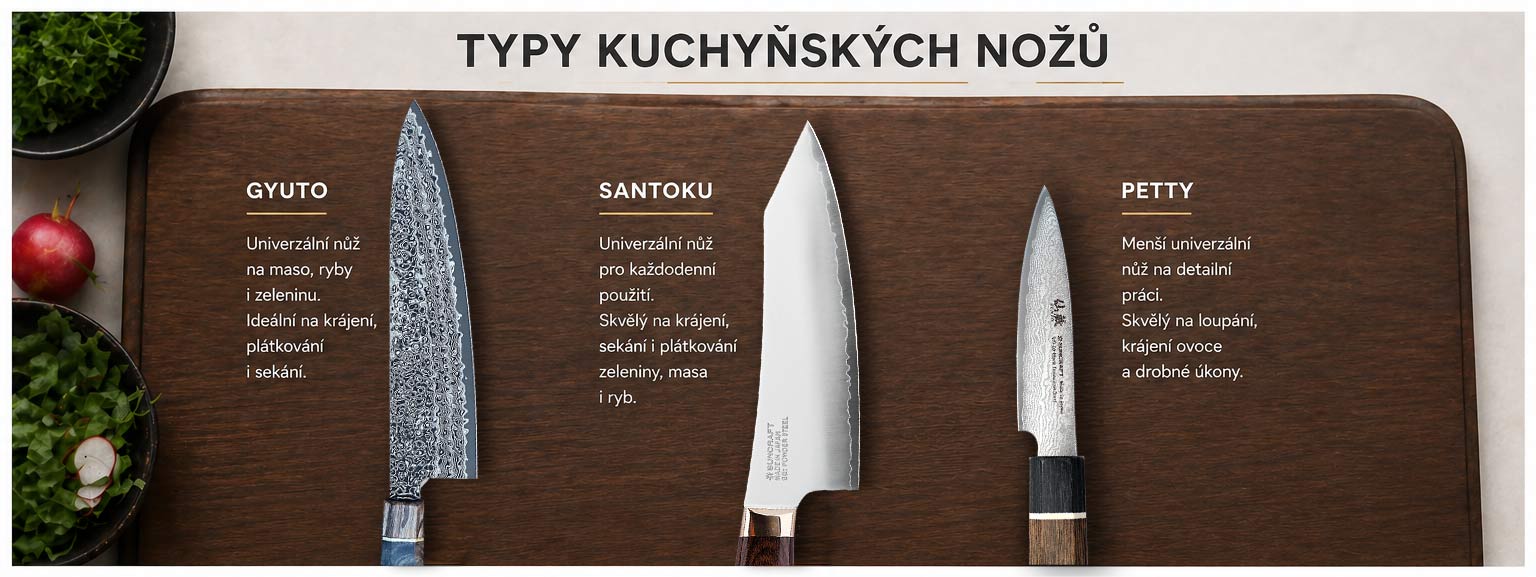
  • Gyuto (chef’s knife) – a versatile kitchen knife for meat, fish, vegetables, and larger ingredients.
  • Santoku – a great knife for everyday slicing, dicing, and chopping.
  • Nakiri – a vegetable specialist with a straight blade for precise cuts.
  • Petty – a smaller utility knife for fruit, vegetables, and detailed work.

Quick recommendation

  • beginner → Santoku 180 mm
  • all-purpose → Gyuto 210 mm
  • easy maintenance → VG-10
  • maximum performance → SG2

👉 If you’re choosing your first high-quality knife, we recommend our best-selling Santoku 180 mm or Gyuto 210 mm knives.
Jak vybrat kuchyňský nůž – Gyuto a Santoku, Petty-2

Santoku vs. Gyuto: What’s the Difference

Santoku is a shorter, lighter, and highly maneuverable knife. It has a straighter blade, making it ideal for straight cuts, slicing, and quickly chopping vegetables, meat, and fish.

Gyuto is the Japanese version of a chef’s knife. It has a longer blade and a higher tip, so it can handle not only precise cuts but also rocking cuts of herbs, vegetables, or nuts.

Simply put:

  • Santoku = simplicity, precision, and control.
  • Gyuto = versatility, longer strokes, and more cutting techniques.

👉 You’ll notice the difference immediately—a high-quality knife cuts effortlessly and doesn’t damage the ingredients.

👉 Which steel to choose

The blade material significantly affects the sharpness, edge retention, maintenance, and price of the knife.

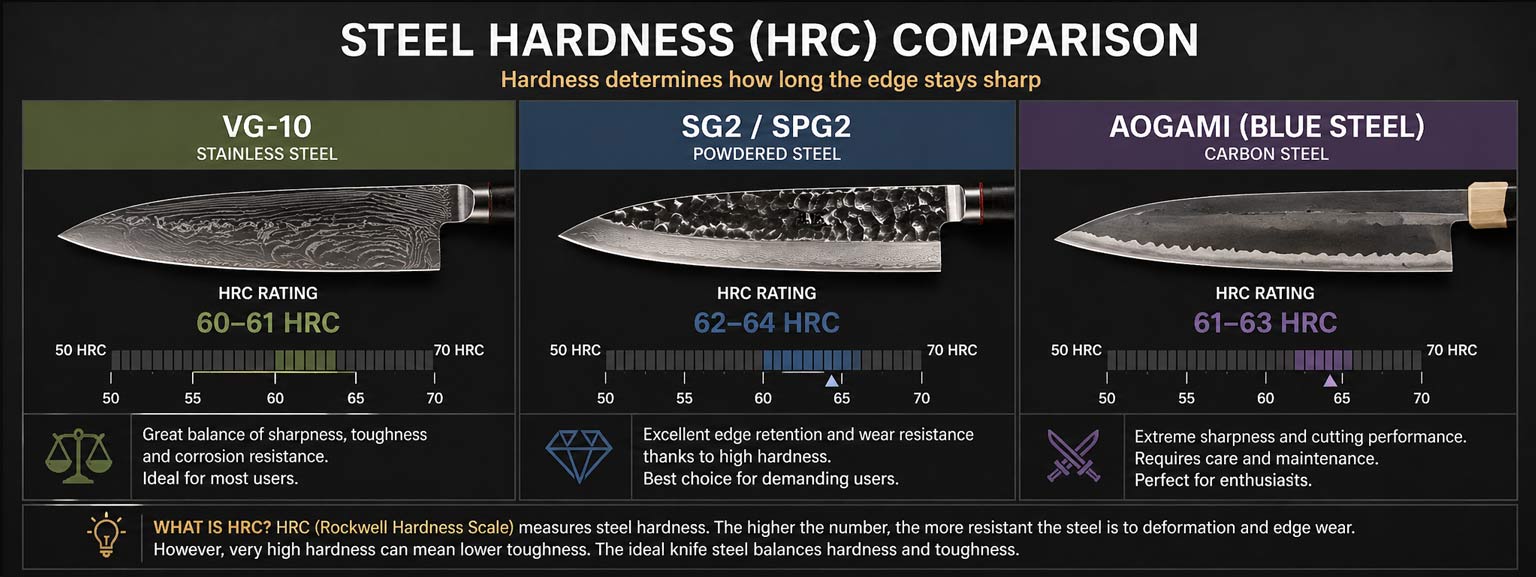
VG-10

Japanese stainless steel VG-10 is an excellent choice for most users. It holds its edge well, is corrosion-resistant, and does not require complicated maintenance.

SG2 / SPG2

Powder steel SG2 / SPG2 is a premium material. It offers extreme sharpness, long-lasting edge retention, and high wear resistance. It is suitable for demanding home cooks and professionals alike.

Aogami / Blue Steel

Aogami (Blue Steel) carbon steel offers exceptional sharpness and an aggressive cut. However, it requires regular care because it can corrode more easily.

For beginners, we recommend VG-10. For demanding users, SG2 / SPG2 is an excellent choice. What does HRC mean for a knife? (Steel hardness explained simply)
porovnání HRC ENG

WA vs. YO: Which Handle Type to Choose

The handle significantly affects the feel of the knife, its balance, and comfort while working.

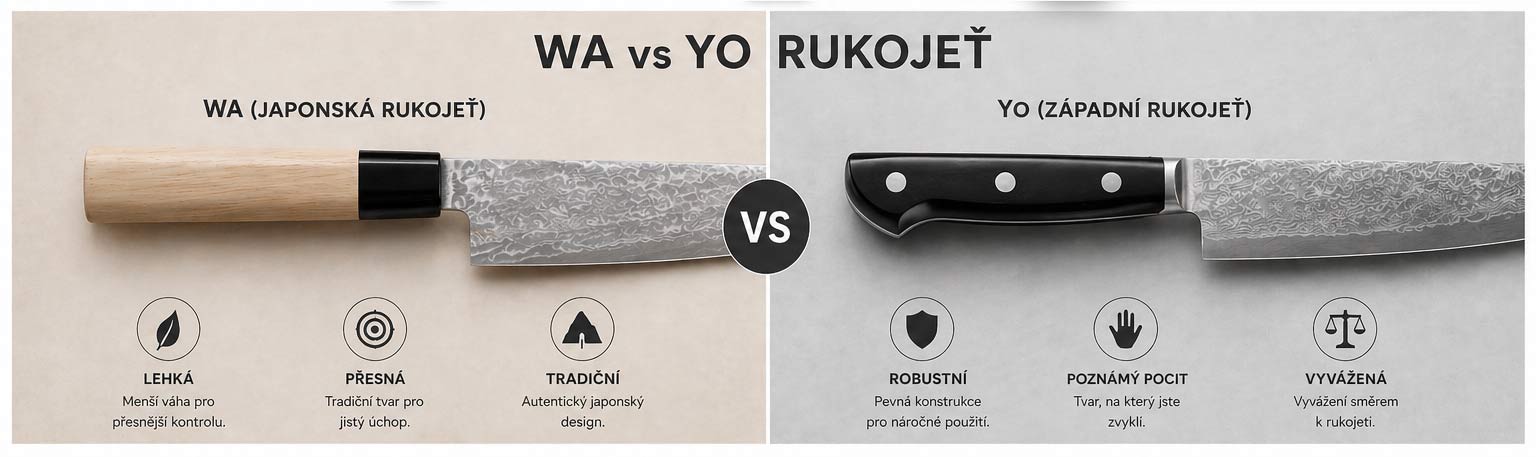
The WA handle is the traditional Japanese style. It is usually lighter, often octagonal, and offers excellent control for precise cutting.

YO handle is a Western-style handle. It is sturdier, heavier, and often resembles classic European chef’s knives.

The choice is mainly a matter of preference. If you want lightness and precision, choose WA. If you prefer a sturdier feel in your hand, YO will suit you.
WA vs YO – typ rukojeti

What to Watch Out for When Choosing

Be wary of knives from questionable sellers who mainly lure customers with constant discounts. A low price often means inferior steel, poor craftsmanship, or merely a flashy appearance without true quality.

You can recognize a quality kitchen knife by:

  • the steel used,
  • the blade’s craftsmanship,
  • its balance,
  • the comfort of the handle,
  • the manufacturer’s origin and experience.

Also watch out for fake Damascus steel. A quality knife should clearly state the blade core material, steel hardness, and overall construction.

Dellinger Recommendations

Based on our long-term experience, we recommend starting with a versatile knife such as a Santoku or Gyuto, which will cover 80% of kitchen tasks.

  • Santoku 180 mm – the ideal all-purpose knife for everyday home cooking.
  • Gyuto 210 mm – a versatile knife for those who want a longer blade and more cutting options.

Here you can choose knives from both Japanese and Chinese manufacturers. Thanks to over 10 years of experience in knife manufacturing, we offer proven quality you can rely on.

Why trust our selection

We are a knife manufacturer with over 10 years of experience. We test our knives in real-world use, monitor the quality of the materials used, and select products that stand up to daily use. Our goal is not just to offer an attractive design, but a knife that truly cuts well, holds its edge, and lasts.

FAQ: Frequently Asked Questions

What is the best knife for the kitchen?

The most versatile choice is a Santoku or Gyuto.

How many knives do I need at home?

For most people, 1 to 3 high-quality knives are sufficient: a utility knife, a smaller Petty, and possibly a bread knife.

What is the difference between a Santoku and a Gyuto?

A Santoku is shorter and suitable for straight cuts. A Gyuto has a longer blade and can also handle rocking cuts.

Which knife is suitable for a beginner?

The best choice is an 180 mm Santoku or a 210 mm Gyuto made of VG-10 stainless steel.

Which steel should I choose?

VG-10 is ideal for most users. SG2 / SPG2 for demanding chefs. Aogami for lovers of maximum sharpness.

What length of kitchen knife should you choose?

The most versatile length is 180–210 mm. Shorter knives are easier to handle, while longer ones allow for a smoother cut.

Which knife is best for vegetables?

A Santoku or Nakiri is ideal for vegetables.

Which knife is best for meat?

A Gyuto or a longer chef’s knife is suitable for meat.

Can I wash a high-quality knife in the dishwasher?

No. Always wash high-quality knives by hand and dry them immediately.

How often should I sharpen a kitchen knife?

It depends on how often you use it. For regular home cooking, sharpening once every few weeks to months is sufficient; honing helps maintain the edge over time.

Is it worth investing in a high-quality knife?

Yes. A high-quality knife cuts better, retains its edge longer, and, with proper care, will last for many years.

Summary

If you’re choosing your first high-quality kitchen knife, start with a Gyuto or Santoku. Choose high-quality steel and a comfortable handle, and don’t let price or discounts be your only guide. You’ll recognize a good knife with every cut—it saves time, effort, and ingredients.