
Knives by type and use
Choose the right kitchen knife
Each kitchen knife has its own shape, purpose, and ideal method of use. A different knife is suitable for vegetables, another for meat, fish, bread, cheese, BBQ, or delicate serving work.
In this category, you will find an overview of kitchen knives by type and specific use, so you can easily choose a knife exactly according to what you prepare most often.
#ShowMore#
Knives by type
Choosing by type is ideal when you already know which blade shape suits you. Japanese kitchen knives differ in profile, length, blade width, and cutting style. This allows you to choose a knife exactly for your way of cooking.
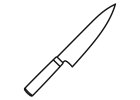
Gyuto and Chef knives
Versatile kitchen knives for meat, vegetables, herbs, and daily food preparation.
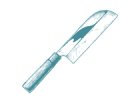
Santoku
A popular Japanese multi-purpose knife with a wider blade for precise slicing, dicing, and mincing.
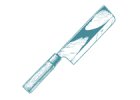
Nakiri and Usuba
Knives designed primarily for vegetables, herbs, and clean straight cuts without crushing the ingredients.
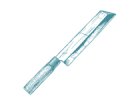
Yanagiba, Sashimi and Sujihiki
Long, slender knives for elegant slicing of fish, meat, sushi, sashimi, and delicate fillets.
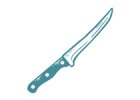
Deba and boning knives
Sturdier blades suitable for processing fish, poultry, meat, and separating meat from bones.
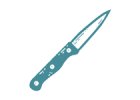
Petty, small and paring knives
Smaller knives for fruit, vegetables, peeling, hand-held slicing, and detailed kitchen work.
Knives by use
Choosing by use helps especially when you are looking for a knife for a specific ingredient or task. With the right knife, cutting will be faster, more precise, and safer.
Butcher, steak and BBQ knives
Robust knives for portioning meat, preparing steaks, grilling, and working with larger pieces of ingredients.
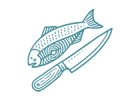
Filleting knives
A thin, flexible blade allows precise filleting of fish and delicate separation of meat from the skin.
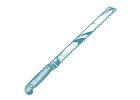
Bread and pastry knives
A serrated edge easily cuts through a crispy crust without crushing the soft center of a loaf or baguette.
Cheese knives
Special blade shapes help cut soft, semi-hard, and hard cheeses cleanly and comfortably.
Pastry knives
Knives for cakes, pies, desserts, creams, and precise work during confectionery preparation.
Knives for children
Tools and knives designed for safer first steps of children in cooking under adult supervision.
Overview of knife types and their uses
| Knife type | Characteristics | Ideal use | Who it is suitable for |
|---|---|---|---|
| Gyuto / Chef | Versatile longer blade | Meat, vegetables, herbs, everyday cooking | Beginners and professionals |
| Santoku | Wider Japanese multi-purpose blade | Vegetables, meat, fish, precise cutting | Home and demanding chefs |
| Nakiri | Straight blade for vegetables | Vegetables, herbs, salads | Vegetable and Asian cuisine lovers |
| Yanagiba / Sashimi | Long narrow blade | Sushi, sashimi, thin fish slices | Advanced chefs |
| Sujihiki | Long slicing knife | Meat, fish, roasts, ham | Professional and home kitchens |
| Deba | Sturdier Japanese blade | Processing fish and smaller bones | Experienced users |
| Petty / paring knife | Short practical blade | Fruit, vegetables, detailed work | Every household |
| Bread knife | Serrated edge | Bread, baguettes, cakes, pastries | Everyday use |
Quick selection based on what you cook most often
How to choose the right knife?
1. Start with the purpose of use
First, clarify whether you are looking for a knife for versatile cooking, vegetables, meat, fish, bread, or detailed work.
2. Choose the appropriate blade length
Multi-purpose knives most often range from 16–21 cm. Smaller knives are suitable for detailed work, longer ones for slicing.
3. Consider the cutting style
A Chef or Gyuto is suitable for rock chopping, a Nakiri for straight vegetable cuts, and a Yanagiba or Sujihiki for thin slices.
4. Think about maintenance
A quality knife requires hand washing, immediate drying, a suitable cutting board, and regular sharpening.
FAQ – Frequently Asked Questions
Which kitchen knife is the most versatile?
The most versatile choice is Gyuto, Chef, or Santoku. These knives can handle most common kitchen tasks.
Which knife is best for vegetables?
Nakiri, Usuba, or Santoku is ideal for vegetables. Thanks to the blade shape, they allow fast, precise, and clean cutting.
What is the difference between Santoku and Gyuto?
Santoku has a wider and shorter blade and is suitable for precise cutting. Gyuto has a longer blade and is more versatile for larger ingredients and rock chopping.
Which knife to choose for fish?
A filleting knife, Yanagiba, Sashimi, or Deba is suitable for fish. It depends on whether you are filleting, portioning, or preparing thin slices.
Which knife is suitable for meat?
A Chef, Gyuto, butcher knife, boning knife, or Sujihiki for clean slicing is suitable for meat.
Do I need a special knife for bread?
Yes, a bread knife with a serrated edge easily cuts through the crust of a loaf or baguette without crushing the soft center.
Which knife to choose as the first one?
As a first quality knife, we recommend a Santoku, Gyuto, or Chef's knife. They are versatile and suitable for most common cooking.






Product sorting
List of products


The NAMIBA MONSTER professional bread knife features an extremely long blade and fine serrations for clean cuts without crumbling. Ideal for bread and desserts. Blade length:...


